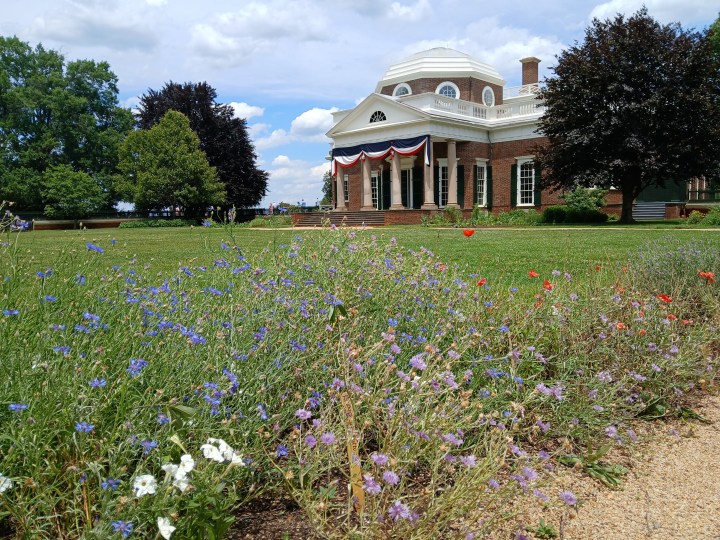
As the 250th anniversary of the Declaration of Independence is approaching, I started thinking about its primary author, Thomas Jefferson. Jefferson has long been one of my heroes from history whom I would love to meet. I realize he was a very flawed man (especially related to his continued practice of slavery even while he philosophically believed it was evil) and I am saddened by his theological views so far from orthodox Christianity. However, he was still an amazing thinker and writer! I am always struck by his intelligence and his curiosity about so many subjects.
However, when I visited Monticello this month, what stood out to me the most was not his intelligence or eloquence, but his love for art and beauty. Though Jefferson isn’t known for his paintings, musical compositions, poetry, or other traditional forms of art, there are signs of his artistry all around Monticello, and in fact, in the house and land itself.
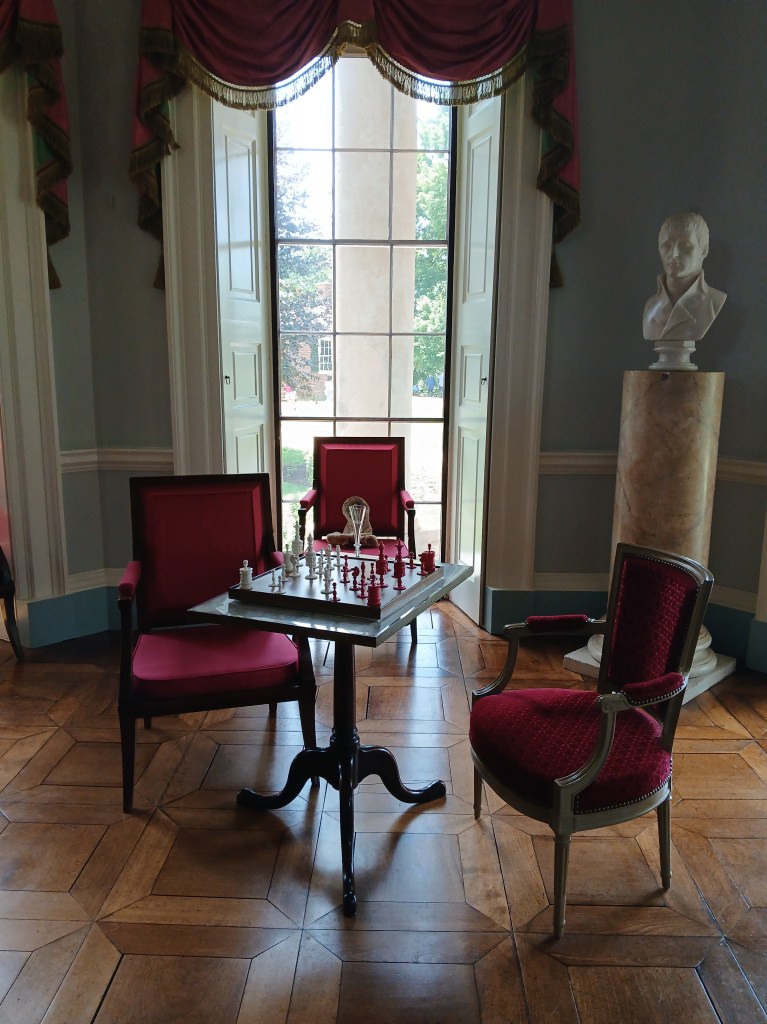
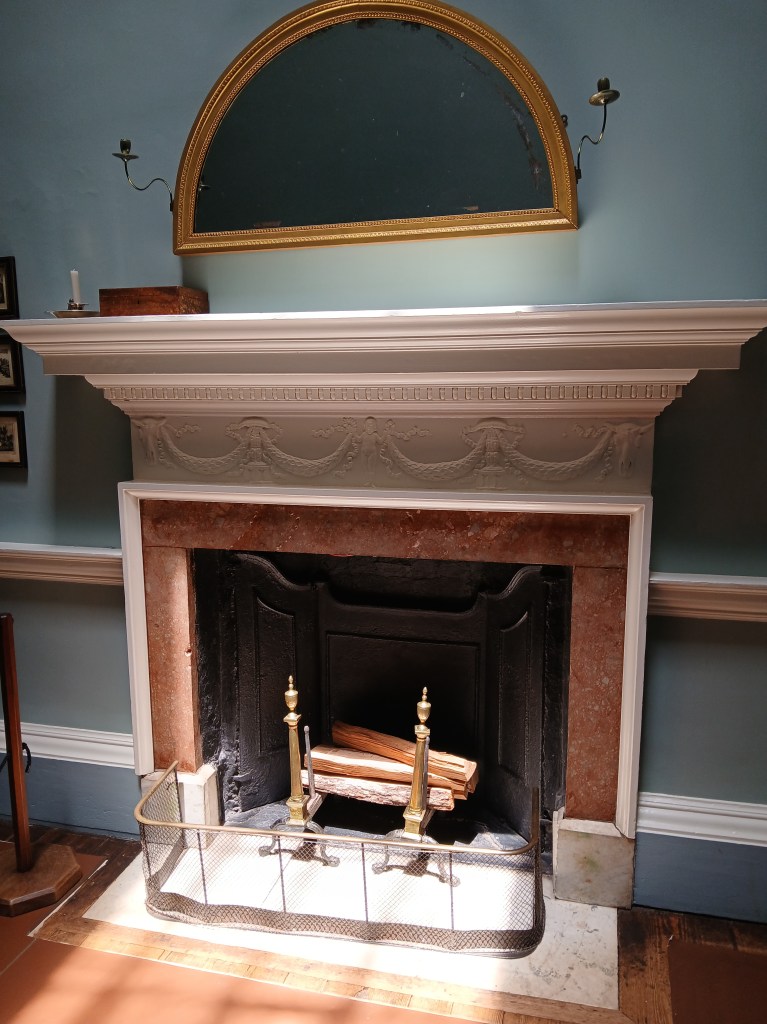
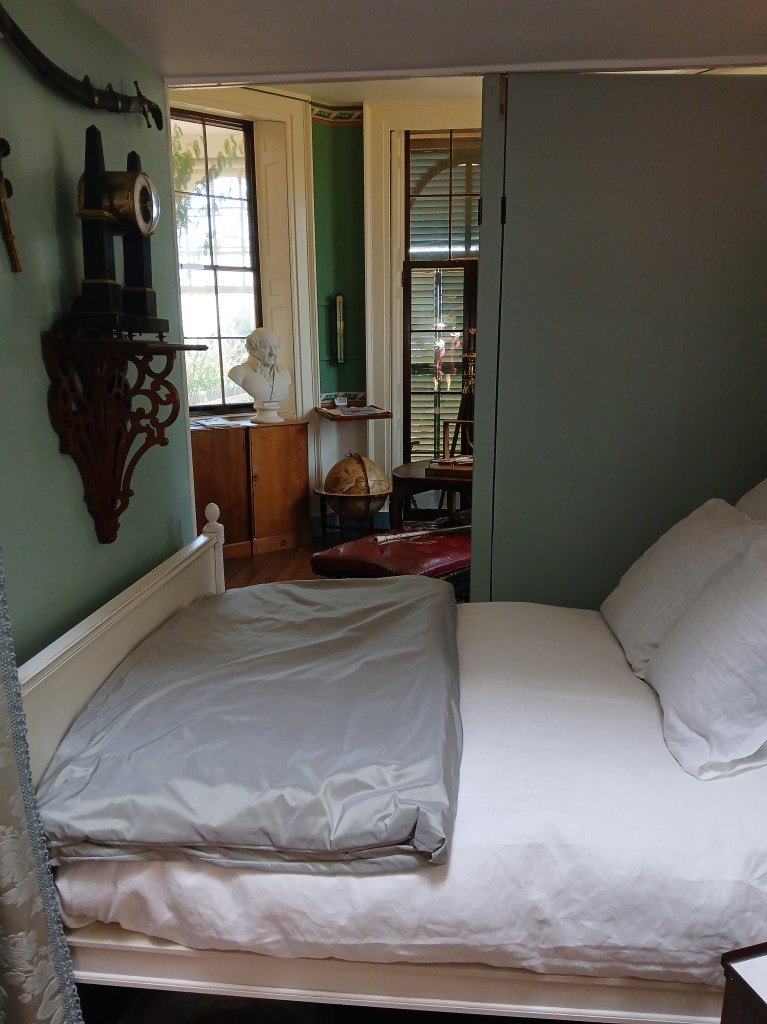
Jefferson was born near Monticello and chose the site for his home without consideration of cost or efficiency. He considered beauty. He chose to build on the top of the “little mountain” despite the cost and inconvenience. The land at the top of the mountain had to be graded and flattened. Even more inconvenient and inefficient, there were no natural water sources for cooking, the gardens, or for the making of bricks to construct the house. I imagine most men of the time would not have found the expense or effort worth the result, but Jefferson wanted the impressive approach to the house and the views from the top.
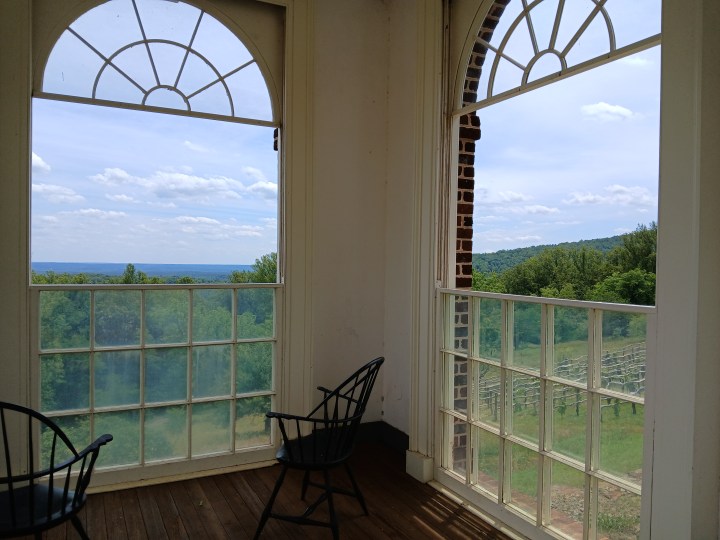
He cared about the beauty in architecture, designing the house that would sit on the little mountain and then redesigning it after a trip to Paris. It is such a beautiful, striking house, it is almost instantly recognizable today! It is also the only private building featured on U.S. currency.
To accompany the house, the gardens were also to be beautiful and reflective of the American landscape. He followed the English garden model of soft, natural lines and paths. He relished trading seeds with explorers, farmers, and botanists across the country. Though we recognize the practice of planting non-native seeds as potentially harmful, Jefferson planted all kinds of things on his property to experiment and discover beauty or usefulness. In fact, I believe his curiosity is another trait that served him well as an artist!
Even the adjacent property shows his commitment to beauty. In his late 20s, Jefferson made one of his first major purchases, the next mountain over, Montalto. It did not give him any economic advantage since the mountain could not be used for farming or other productive means. He purchased it mainly to preserve the view from Monticello. Over time, he had many different ideas of how he could improve the land. He considered a waterfall, or an aqueduct (both impossible again because of the lack of water), or of letting a lone American bison graze on the land, or even clearing and preserving a lone stump. These were not things of practical or economic value. They were drawn from classical landscape paintings. Ultimately, not much was done on Montalto, but today it is a half wooded, half cleared mountain with a road winding up to the peak among some single trees in the clearing.
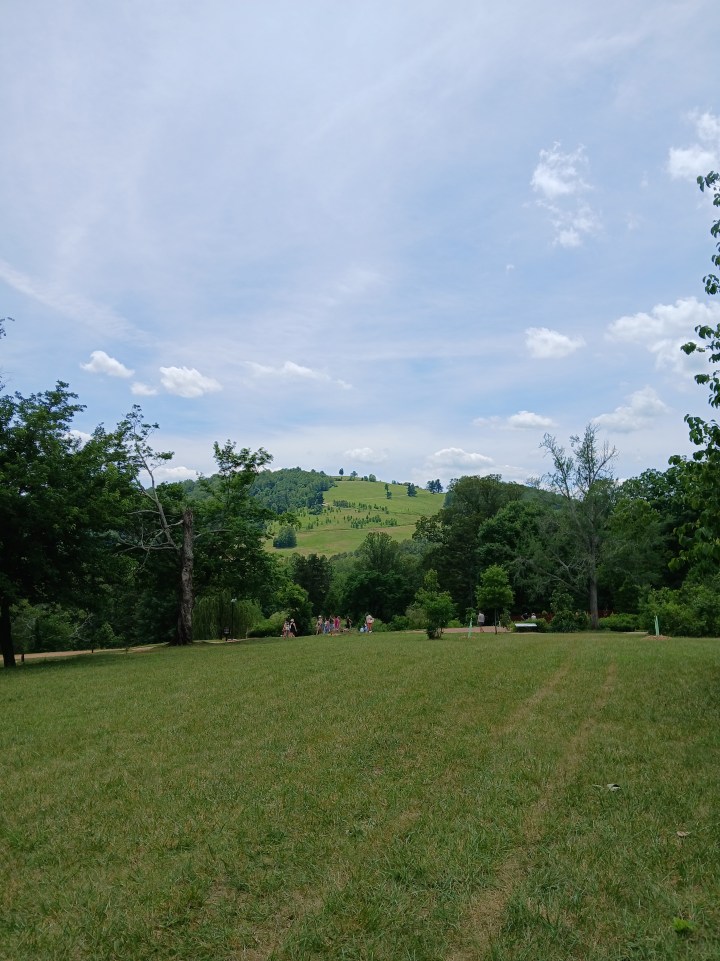
It had been close to 20 years since I was last at Monticello. The two things that I still remember to this day were how intriguing and inviting Montalto was and about a grotto Jefferson had talked about, but never implemented where underbrush was cleared out from the forest so that there were only old growth trees and moss. At the time I last visited, there was a small section of the woods that had been cleared of underbrush to illustrate this idea. I remember lingering in the grotto for several minutes after the majority of the tour group had passed, to stand in the hush. It was magical. I also remember longing to go exploring on Montalto.
On this visit, the tour guide I spoke to didn’t even remember the grotto so it must have been allowed to grow up again fairly quickly. I checked but Montalto is not open to the public so my longing to explore it is unfulfilled. However, most of the pictures I took on this trip were of Montalto at varying distances and angles.
Thomas Jefferson was an interesting person for many reasons. Thank you for indulging me in exploring one characteristic that doesn’t get as much attention or carry as much historical or political weight. In this discussion, it would be fair to acknowledge that the cost of beauty was not only high for Jefferson personally. Most of the time and effort expended was by the enslaved people under Jefferson’s direction. The significant economic cost to Jefferson was one of the reasons he died in such terrible debt that it took two generations for his family to pay it off. Some might say the cost was too high.
Monticello receives 400,000 to 500,000 visitors a year. Though I am sure many people come for the historic significance, I am also sure each one somehow benefits from the gift of beauty Jefferson gave them through the extravagant are work of designing his home and land, even if they don’t realize it! Even the most practical and business oriented must be somehow impacted by the carefully crafted beauty which offers transcendence. I wouldn’t want to have been the one to decide if the cost would be worth it or not, but I am deeply thankful to benefit from it now!

