
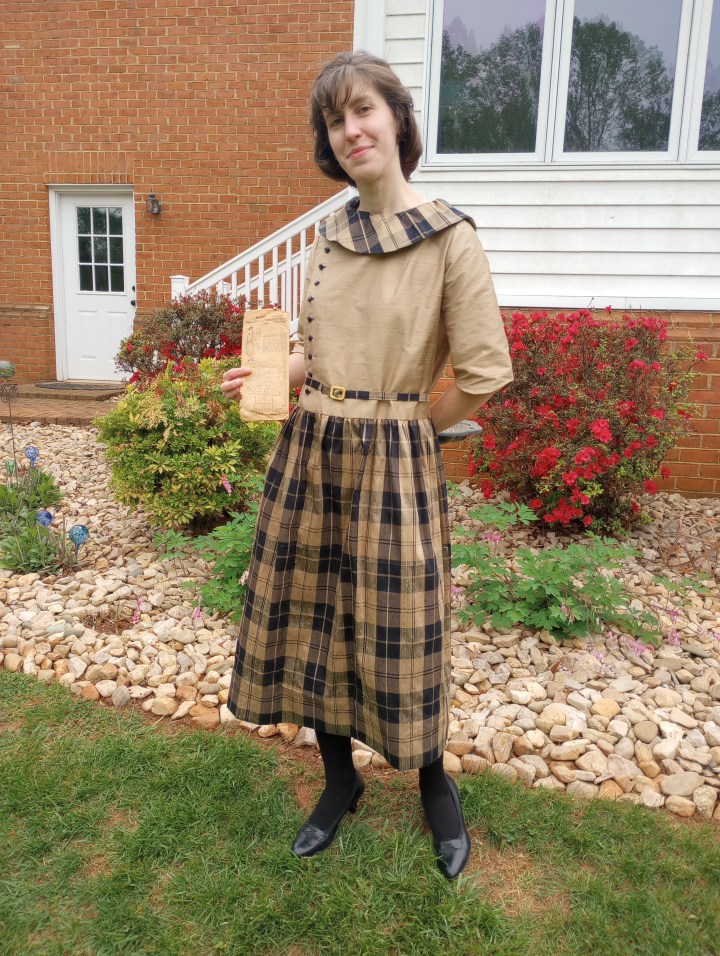
I was thrilled (and very surprised) when I found this pattern for $6 at an antique expo. It was even my size! See the price for the same pattern (Pictorial Review Pattern 9430) currently for sale! This pattern was patented 1907, but I think the copyright might have referred to the company, not the specific pattern. The style of the dress and the number sequence points to the early 1920s.
All of the instructions are printed on the small envelope itself. Today, most sewing patterns come with 6-8 large pages of instructions with lots of illustrations. In the 1950s, most sewing patterns came with 2-4 medium pages of instructions with a few illustrations. But apparently in the 1920s, this was all you needed.

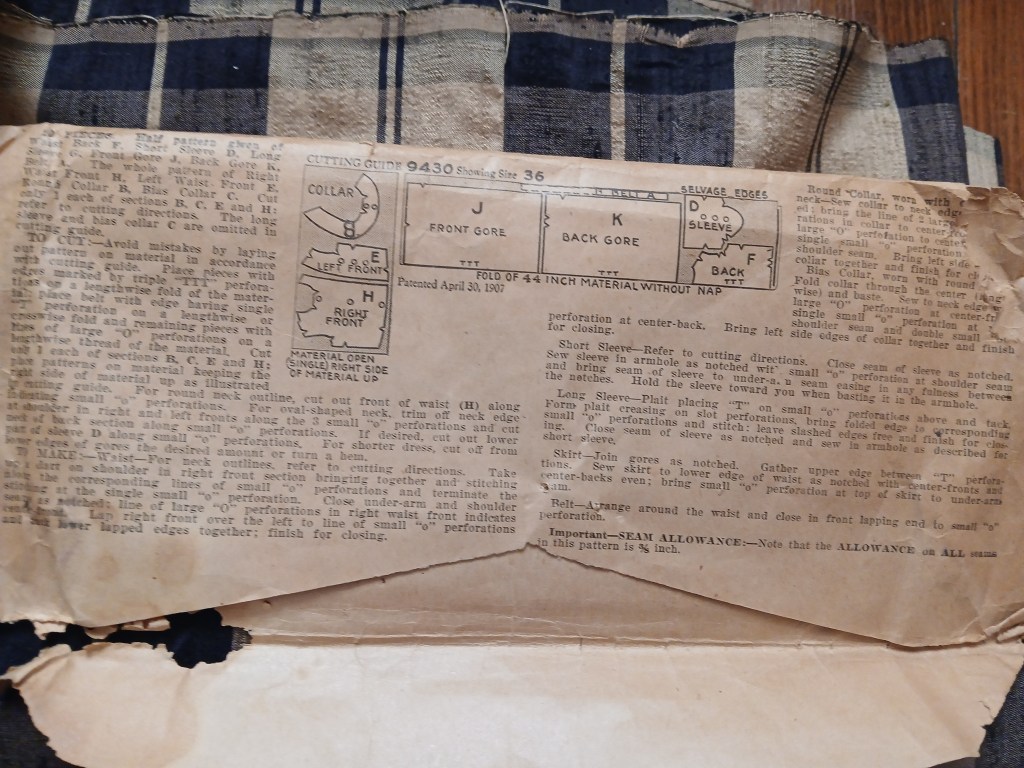
The dress itself was not very complicated (fortunately!), but the lack of instructions made using this pattern challenging. They give very general instructions for things that would usually be spelled out (for ex. how to finish seams, what size and how many buttons you need, how to hem edges, in what order to attach facings, etc.).
Because the pattern was so old, I had several prep steps before getting to the actual dress. For some of the pattern pieces, I had to trace them onto tissue paper because the original pattern was so fragile or had tears (or had been nibbled on). Before the 1950s, most patterns were perforated instead of marked with ink. So, I also had to mark large and small circles, Ts, etc. on my new pattern pieces. Then, I made a full mockup of the dress to figure out how to make it before I cut my fashion fabric.

The mockup was helpful, but there were a few places I got stumped, particularly with the collar and the front closure. I solicited my mom’s help. We realized that the pattern kind of assumed you would make facings for the front asymmetrical closure, but it didn’t mention facings or give a pattern for them. The bias collar was also confusing. Though perhaps I was getting thrown off because I wasn’t sure which image had the round collar and which had the bias collar? Anyway, I ended up sort of drafting the collar myself.
Disclaimer: I made this dress for the challenge of it, knowing the 1920s style is not really the most flattering for my body type. Because I don’t plan to wear this dress very often, I didn’t worry about it being washable. I had some small remnants of shantung silk and used two coordinating pieces (one champagne, the other a black and champagne check) for a dressy look. I also had a set of a dozen pearly black buttons (even though it took forever to hand sew the button holes!)

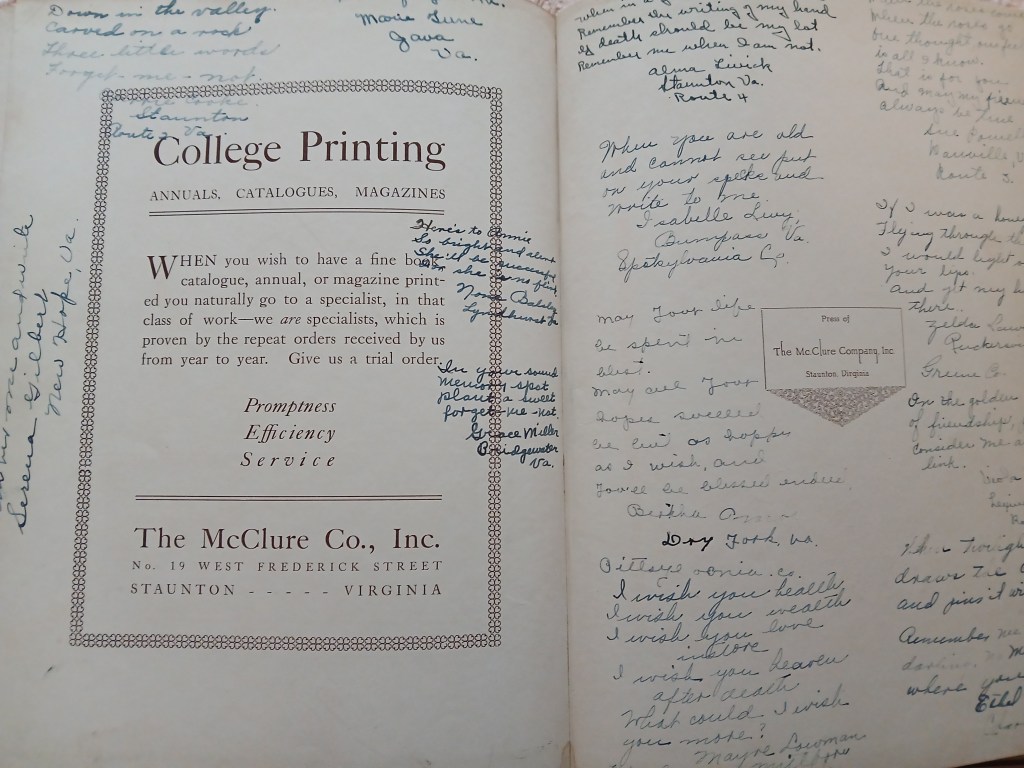
While working on this dress, I also started perusing a set of three yearbooks dated from 1923 to 1925 for a women’s college in Harrisonburg, Virginia. I love old yearbooks, especially when they have notes from friends! The funny, rhyming notes in these yearbooks reminded me of the ones signed in my great grandmother’s school autograph books. Yearbooks are intentionally meant to be a kind of memory book for the participants, but you can learn a lot about daily life in historical time periods through them too.

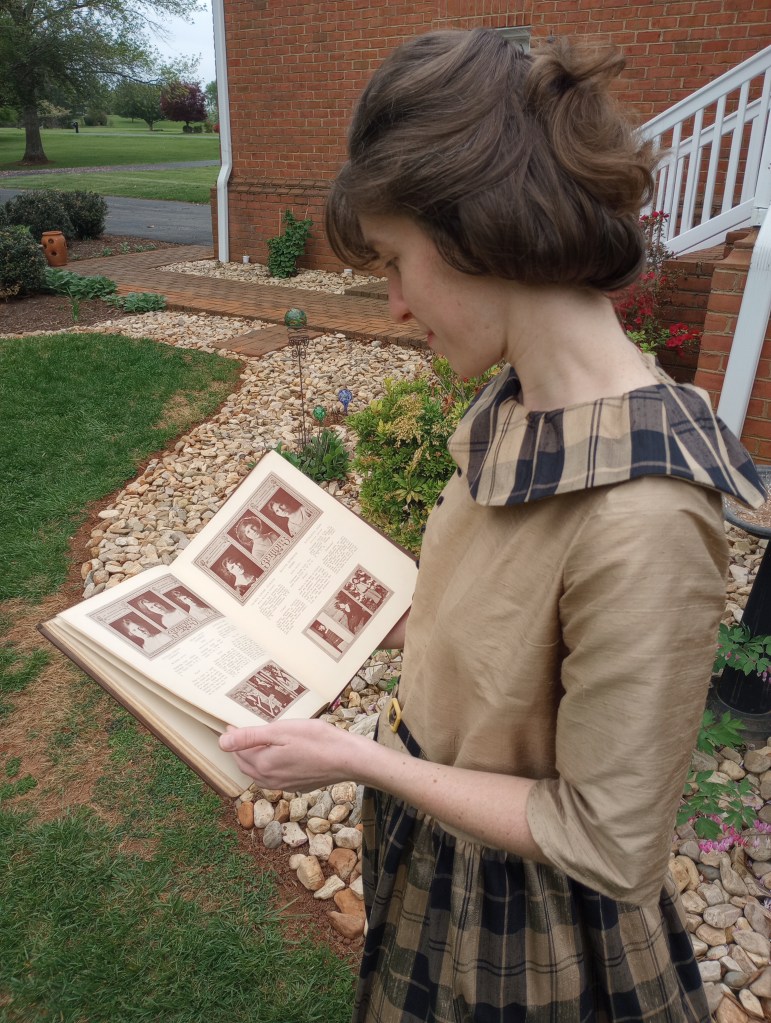
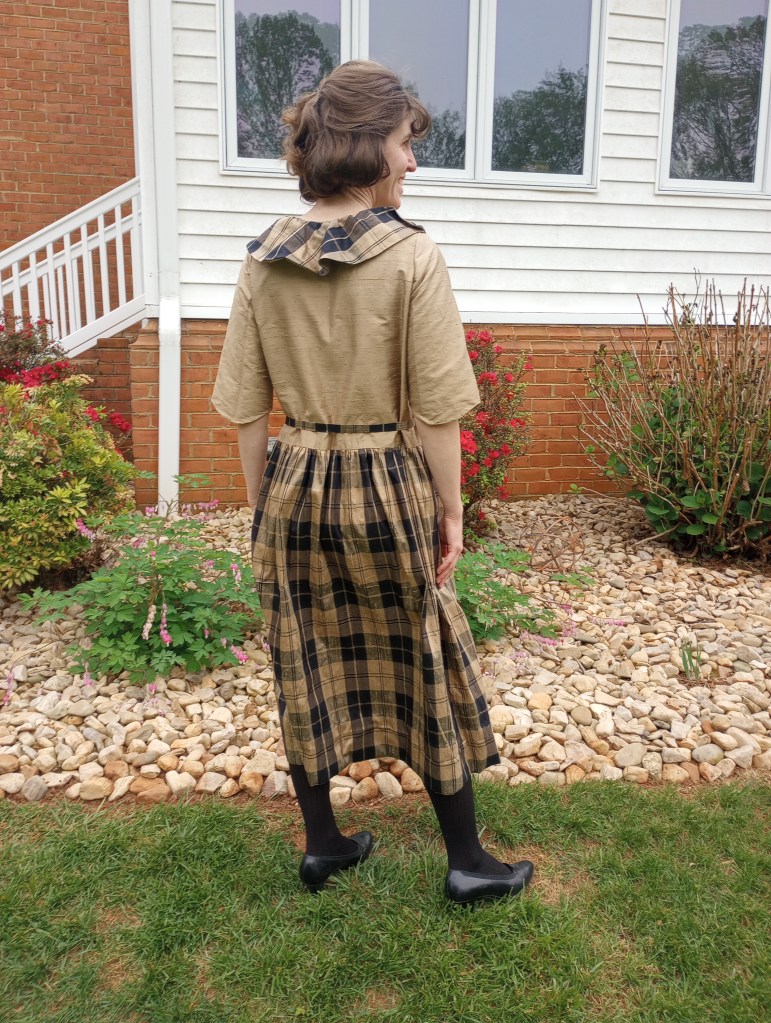
For example, I was very happy to see so many skirts made of wide checked fabric just like my dress! Their hairstyles also served as inspiration for mine in this photoshoot. In the early 20s, though a short bob was gaining popularity, many women still had long hair, which they would wear up with a lot of volume and sometimes for a faux bobbed look.


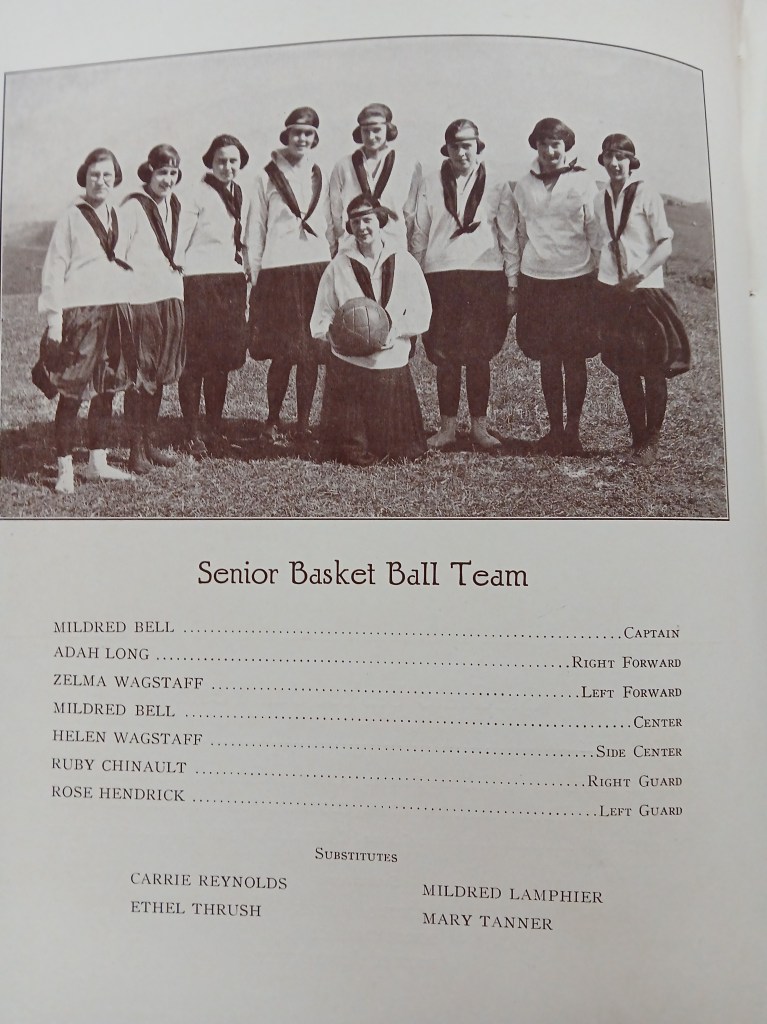
Of course, I’m sure you’ll also want to see the 1923 women’s basketball team! They had six positions instead of five (not sure if was the same for men at the time?) They were a little crazy with clubs, for sports, based off of their city of origin, music, home economics, theater, etc. There were also several clubs based on people having the same name (an Elizabeth club, Louise club, Virginia club, Frances club, Mary club, etc.) There was a full two-page spread listing weddings that year, as well as some comics.

At the end of the year book, they listed the addresses of all the students (how times have changed!). One young woman lived in a house one block down from me. Since my house was built in 1917, it is fun to imagine the early occupants of the neighborhood.
More sewing projects, musings, and history to come!
 Welcome To The Carriage House
Sooo cute! I applaud you, Chelsea; you have gone way beyond anything I would tackle. =D
LikeLike
What a cute look! And what a nice job you did!
LikeLike