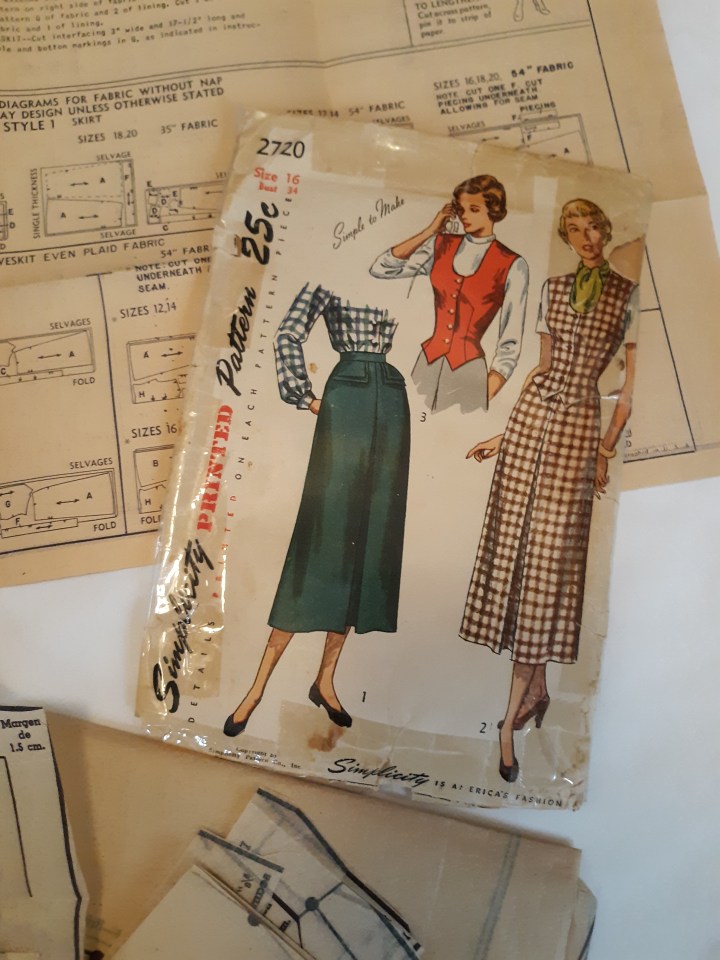
Vintage patterns are possibly my favorite type of ephemera (though that would be a hard decision). They capture so much in a small, delicate package. The artwork is beautiful and there is something so lovely about paper that has aged and requires care. Of course, old patterns provide snapshots of the fashions in bygone days, but they also illustrate an era that not only dressed differently, but also functioned differently. These were decades when many women (though perhaps no longer the majority as in the previous century) made their own clothing. A time when fashion moved a little bit slower so that you might want patterns for collars, vests, and other accessories or removable pieces of the wardrobe that were easier to change out than a full dress. It spoke to an era when many women had proficient sewing skills, by hand and by machine. Sewing books and magazines of the time give suggestions on how to adapt old dresses into new ones, men’s suits into women’s suits, a man’s shirt into a child’s night gown, etc. It was a time when material was of a high enough quality to survive several lives with a little care and ingenuity.

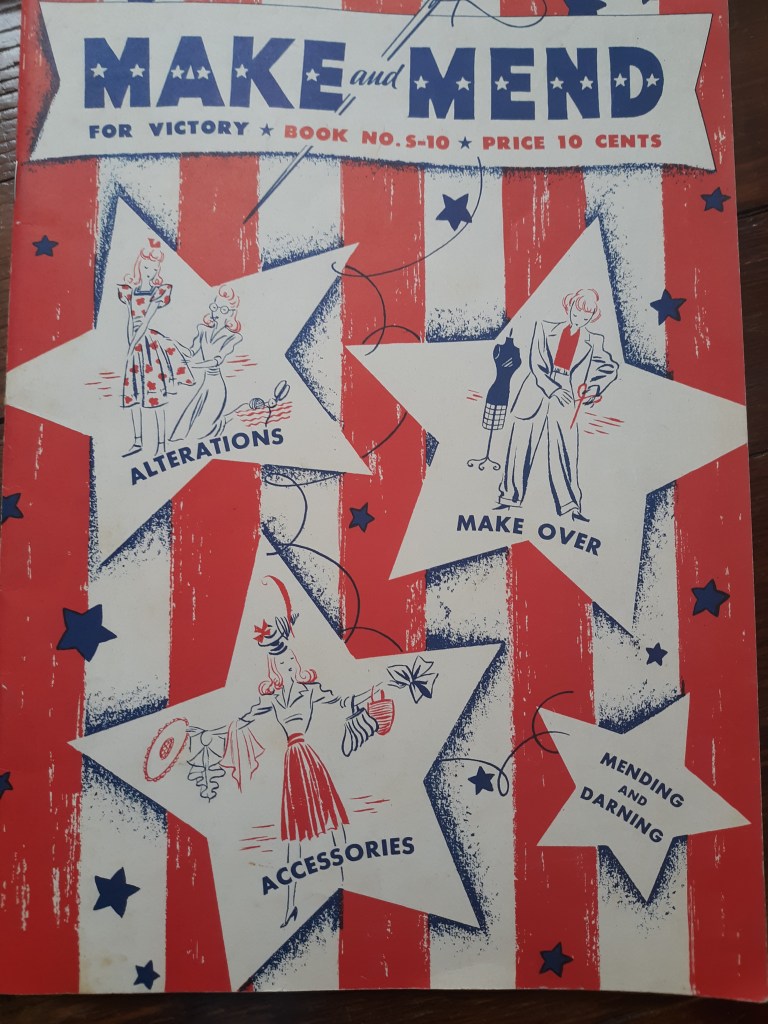
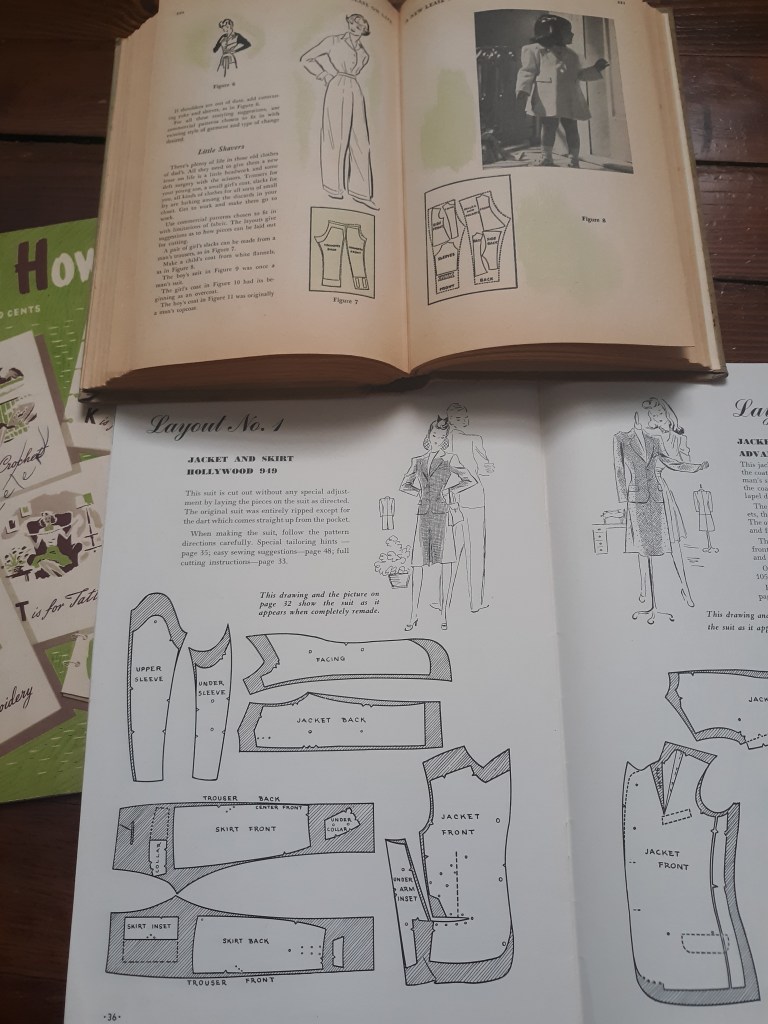
I recently obtained a LARGE box of vintage patterns from a lady who had purchased them years ago at an estate sale. It has been so fun to go through them, over 400 patterns! I wanted to share a few of them with you.
The oldest patterns were from the 40’s. Some from this decade did not even have anything printed on the pattern pieces. Instead, they came already cut to the correct size, with the label for the pieces marked with a little perforation. Markings such as button holes, darts, etc. were marked with little pinpricks. I have not yet attempted to make an outfit from one of these patterns. I am not brave enough yet! In addition to the standard companies still functioning today (Simplicity, Butterick, and McCall’s), I also have some patterns from Annie Adams, Advance, and Hollywood Patterns.
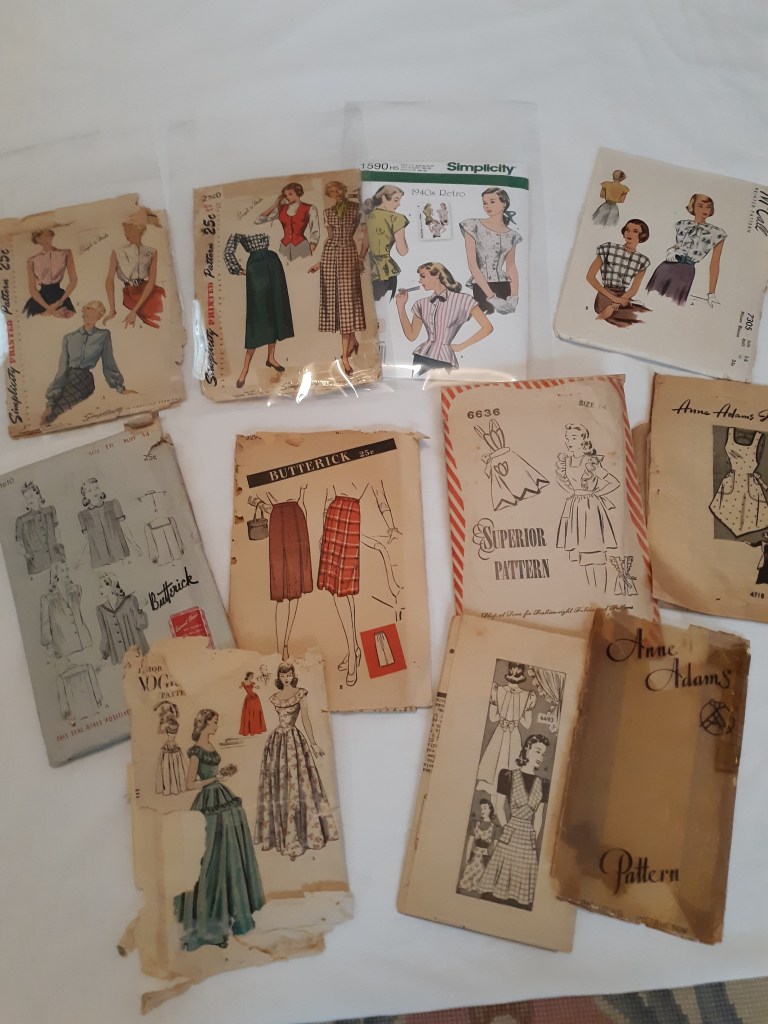
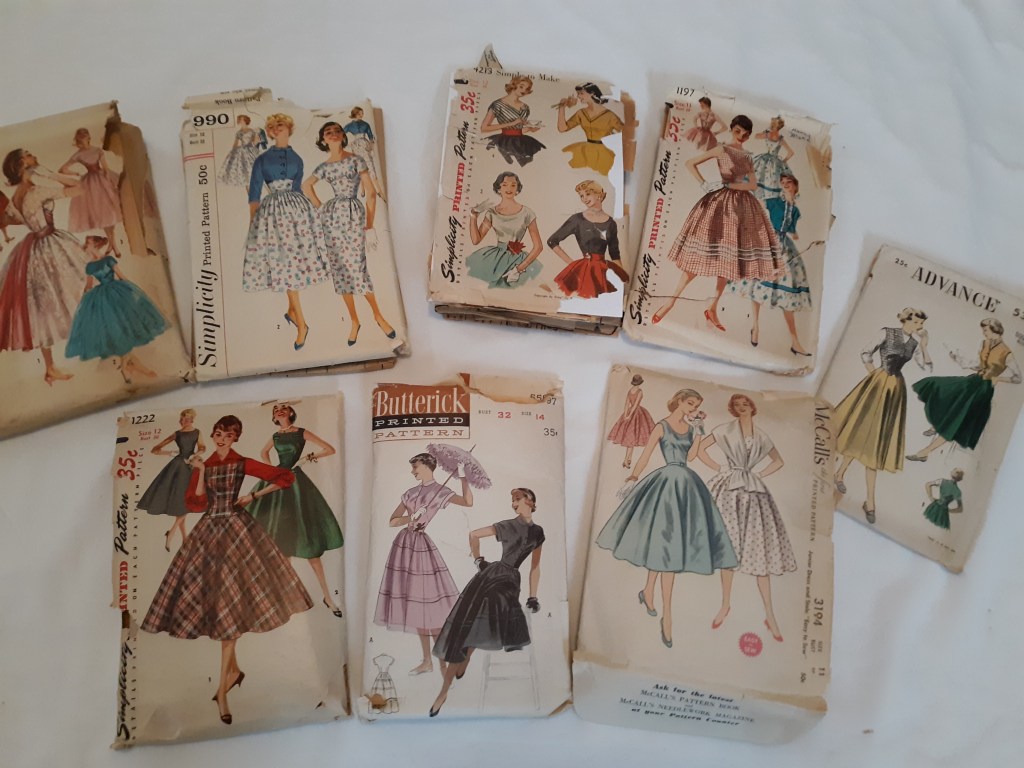
The 50’s patterns are easily my favorites. I love the classic, feminine silhouette. These patterns were printed on the tissue pieces. The most common brands are Simplicity, McCall’s, Butterick, and Vogue.
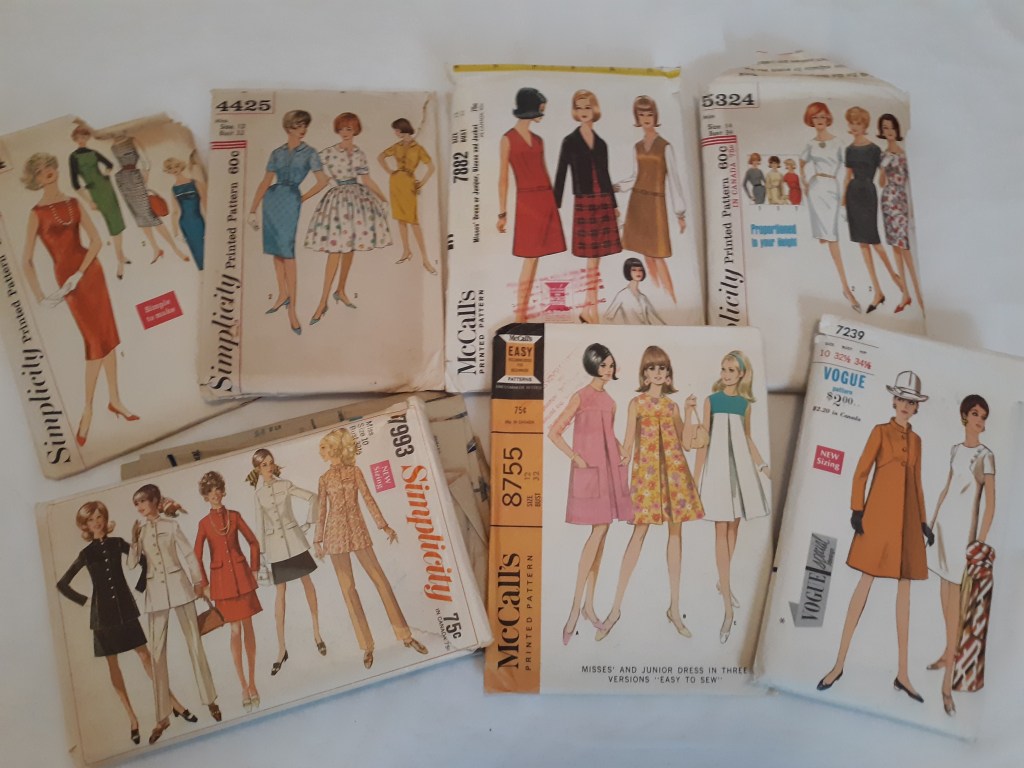
The 60’s patterns begin to show a trend toward “easy to make” or “only 3 pattern pieces” type patterns. Some of this has to do with the simplicity of style that was trending, but it also reflects the shift in culture. More sewers needed or wanted “easy” patterns, with fewer steps and less fuss.
I have some patterns from the 70’s and 80’s but I don’t find them as interesting. I don’t care for the silhouettes and most of the lovely detail has disappeared by this point.
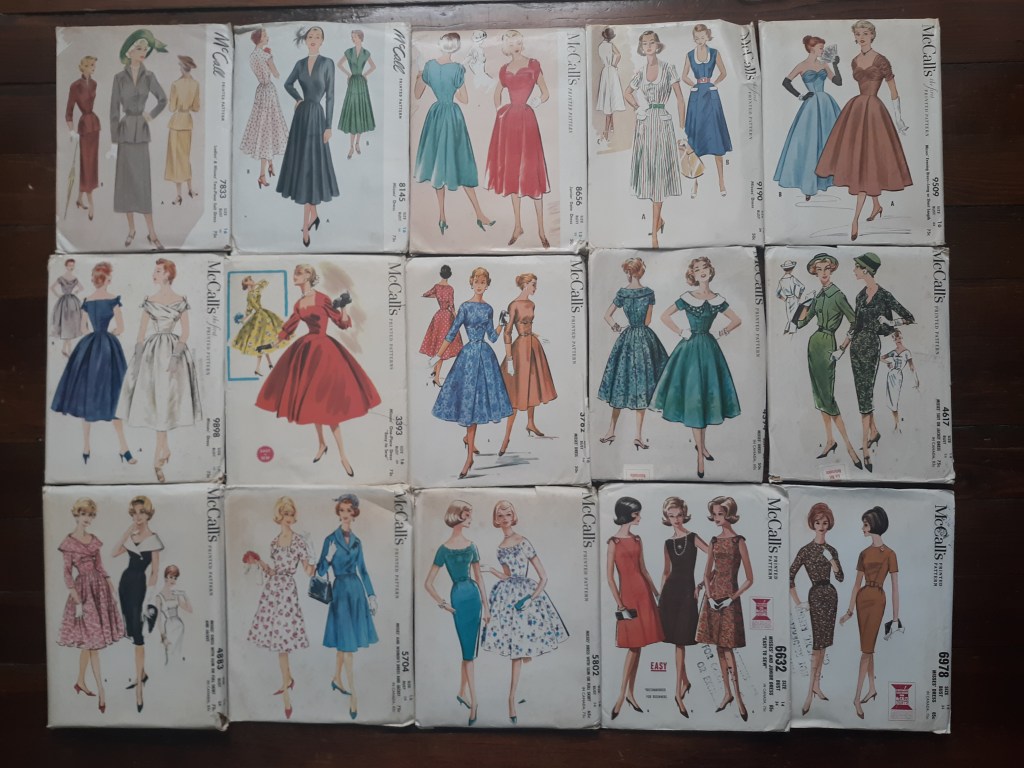
While going through my new patterns, I discovered that McCall’s consistently dated every pattern on the back of the envelope. Thanks! Vogue was the next best at this, with more than half of the patterns being dated on the back. Most of the other patterns I had to guess the age by silhouette of the clothes, the style of the illustrations, etc. Some may have the date on the instructions inside if I take a closer look. Here is a great snapshot of the change in fashion over 15 years. I have a McCall’s pattern from each year, starting in 1949 through 1963. Notice how the skirts get wider and then narrower again, peaking in 1955.
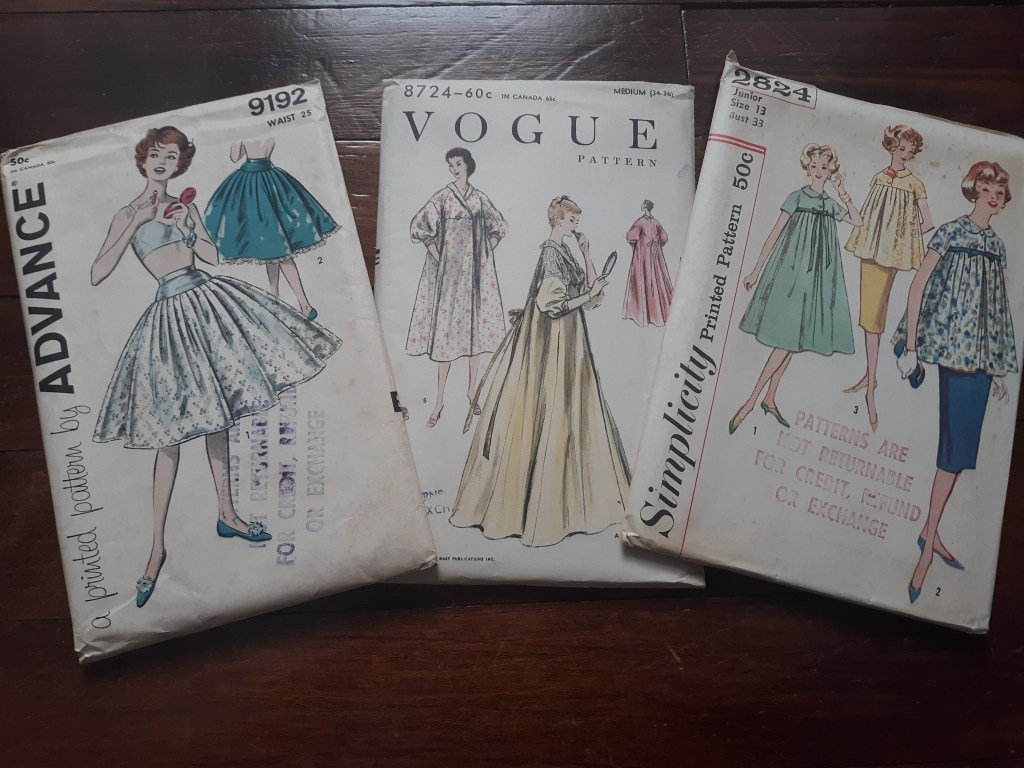
Most of the patterns were standard dresses, but there were also some unusual patterns. There were nightgowns, robes, a bathing suit, crinolines and slips, and a few maternity outfits (which were very discreetly labeled in small print on the back).

The lot also included some formal wear, including these wedding dresses. I don’t even want to look to see how much yardage is required for some of these. It kind of amazes me that brides used to make their own wedding dresses.

The Vogue patterns were very stylish. For certain Vogue patterns, when you purchased the pattern, you could also request the “Vogue” designer label from the counter to sew into your clothing. I guess that made it feel like you had bought the dress itself? Or so that anyone snooping in your closet would think you shopped in Paris? Haha!
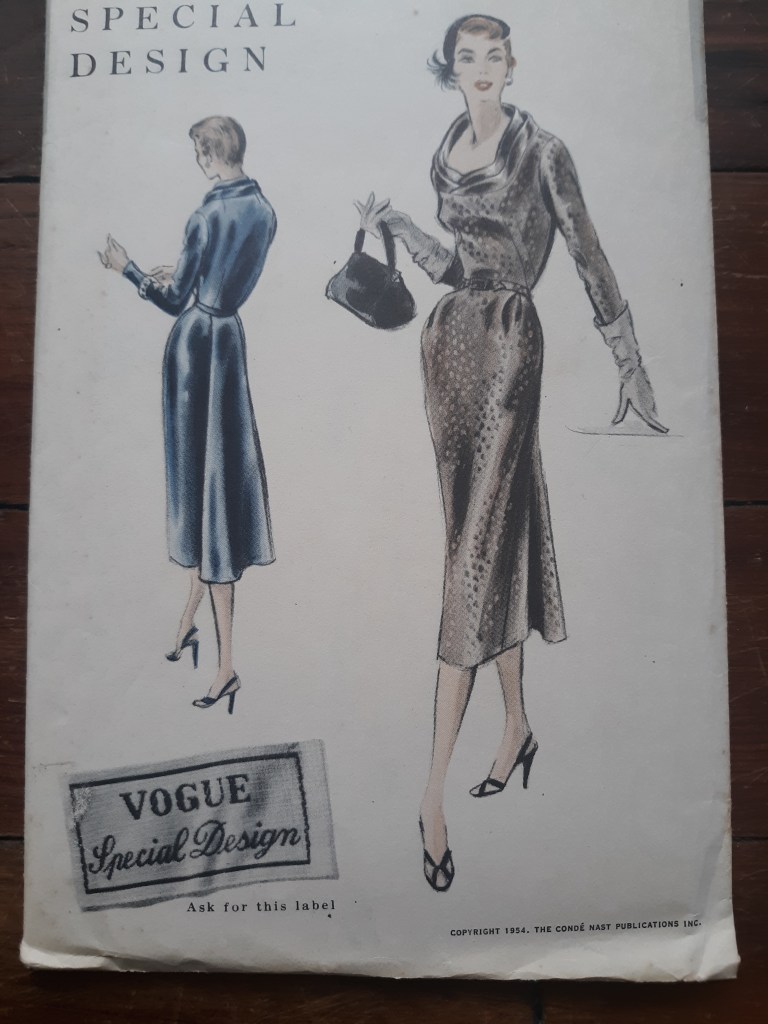
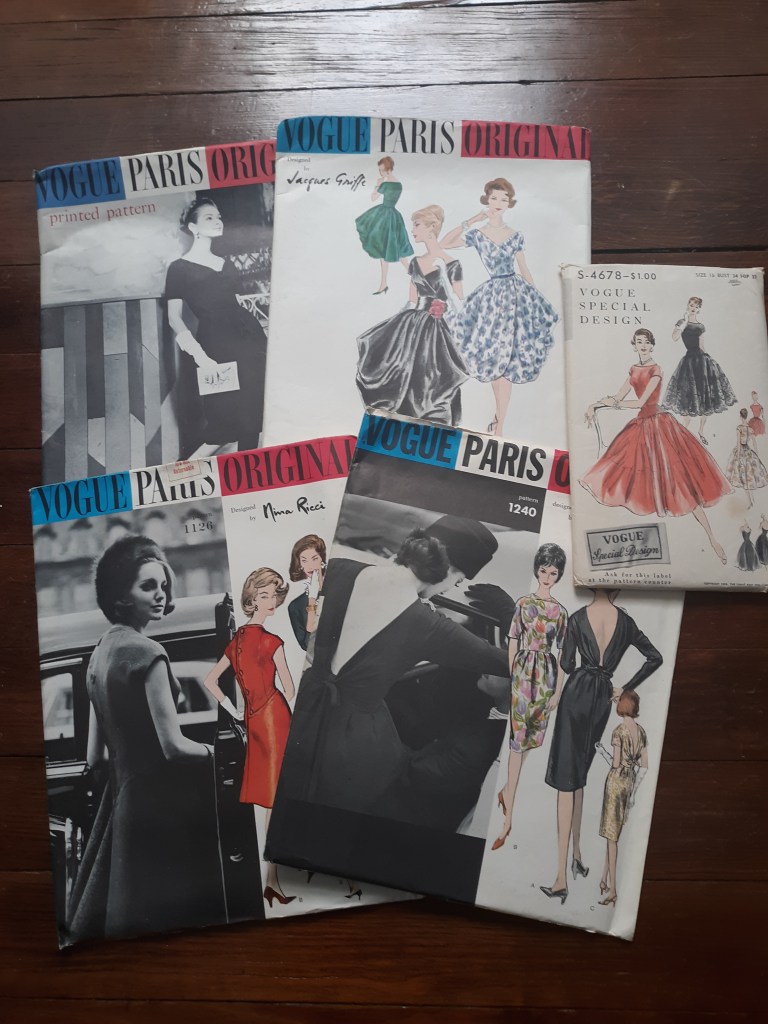
A lot of the paper envelopes were crumbling. Some of them had been tucked in quart size Ziploc bags, but the zippers tended to catch on the edges and do more damage. I searched online for solutions and discovered the brilliant solution of comic book covers. These are archival quality, nothing to catch on, roomy size, and can be sealed if you want.
I hope you enjoyed looking at some of these. My cup overflows (as does my craft closet) and I will probably sell many of these patterns. If you would be interested, let me know in the comments. I may put them on Ebay or even sell them directly through my blog. I’m thankful they came across my path.
Update: Check out my Etsy shop for vintage patterns!
 Welcome To The Carriage House
Crazy how women used to have 5″ waists. I don’t think I could fit several decades of dresses, hahaha.
Thanks for sharing this, so interesting! Kay
On Sat, Feb 19, 2022, 6:32 PM Welcome To The Carriage House wrote:
> harpandsong2 posted: ” Vintage patterns are possibly my favorite type of > ephemera (though that would be a hard decision). They capture so much in a > small, delicate package. The artwork is beautiful and there is something so > lovely about paper that has aged and requires care. O” >
LikeLike
The illustrations may be slightly exaggerating the small waist. 😉
LikeLike
Love to see these, enjoy your interest in them! I think the pinpricks may be from the marking wheel.L.
LikeLike