
We’re going even further back in history today! In the Greatest Haul of All, these three dresses, which I estimate to be made between 1910 and 1920, all fit me and I’m excited to show you all of their beautiful craftmanship and details!

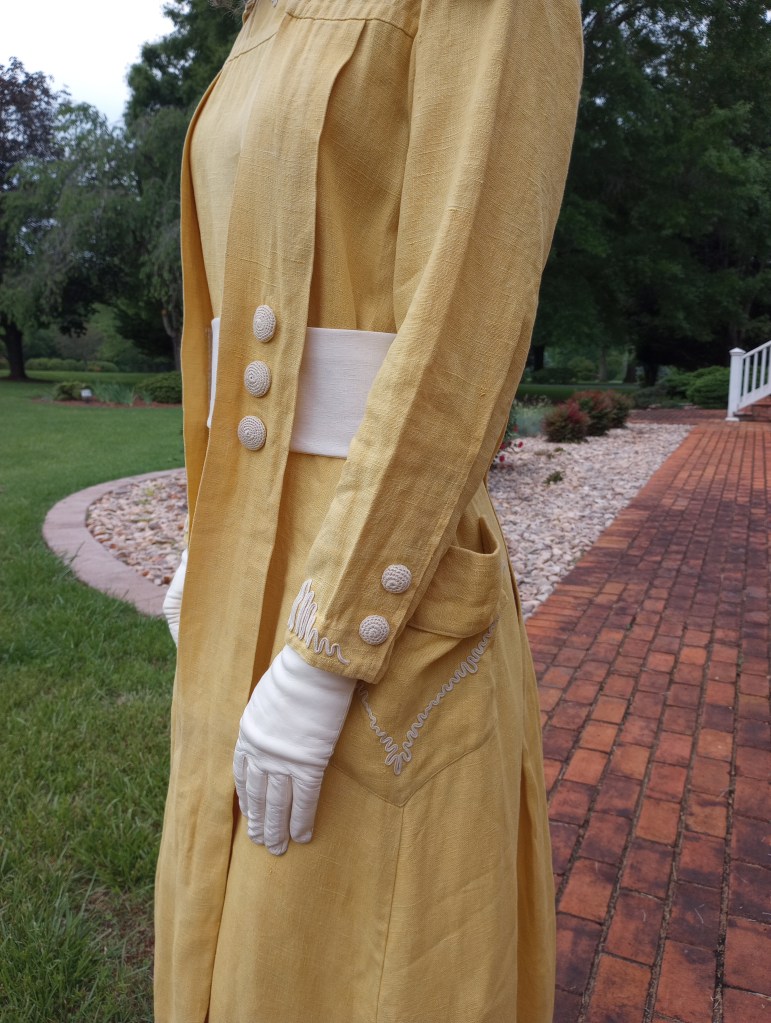
From the silhouette, I believe this yellow dress was made in the late 1910s. It still has a natural waistline but is not as tailored. It is a very thick material. That, along with it being loose fitting with a front closure, makes me wonder if it was an over dress, maybe to wear on an automobile ride?

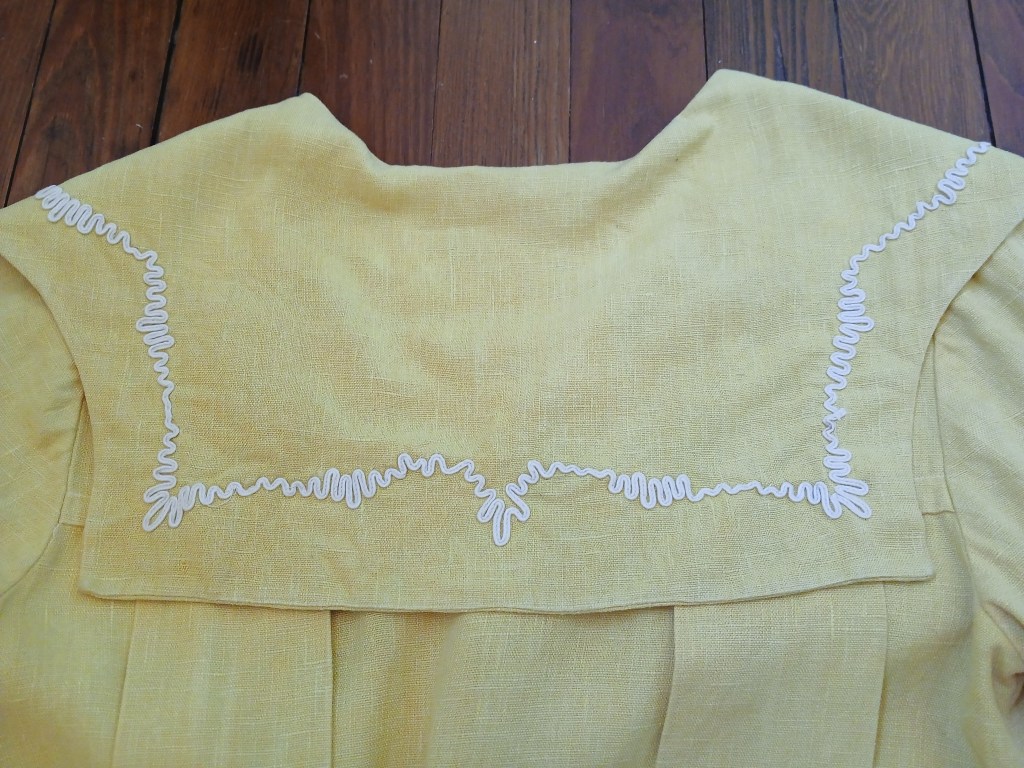
The belt was missing, so I made one out of white fabric which matched the texture and feel of the garment. I’m not sure if the original belt would have been yellow or white, but I am sure it would probably have had some embellishments, perhaps similar to the places around the collar and cuffs. I loved how the belt was secured by being passed through slits in the pleats instead of normal belt loops. The pleats allowed the garment to be tailored on top, but open into a fuller skirt at the bottom. The buttons are hand crocheted and gorgeous!


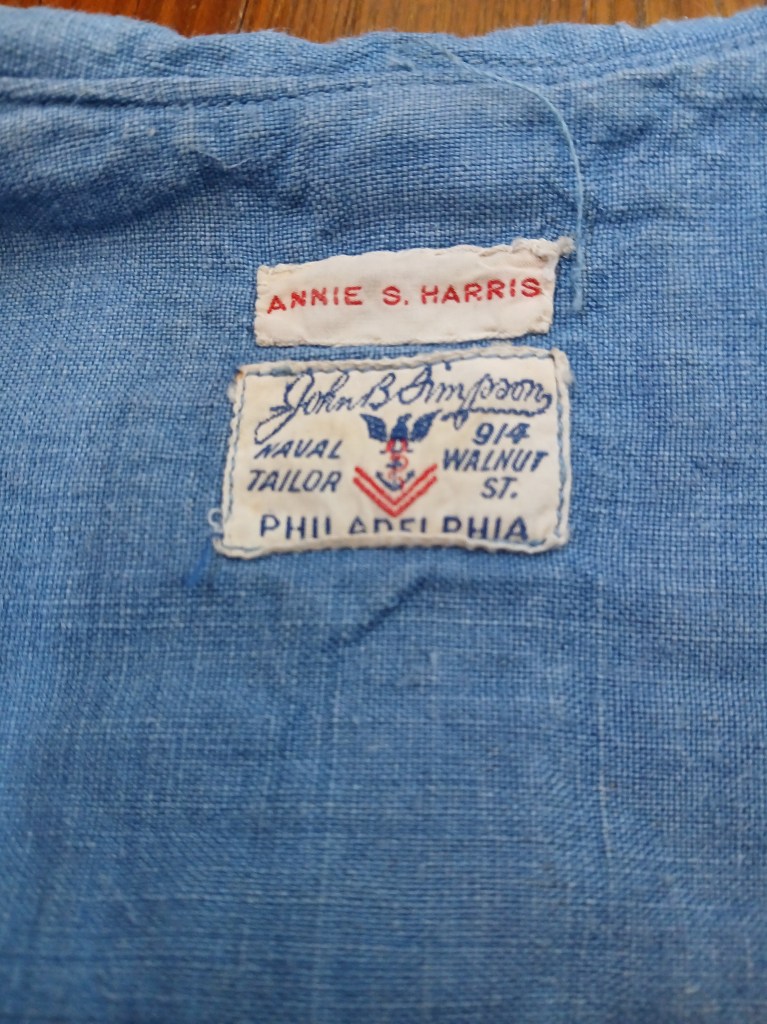
You can see on the inside how carefully finished the seams are. The owner’s name is also in the garment.

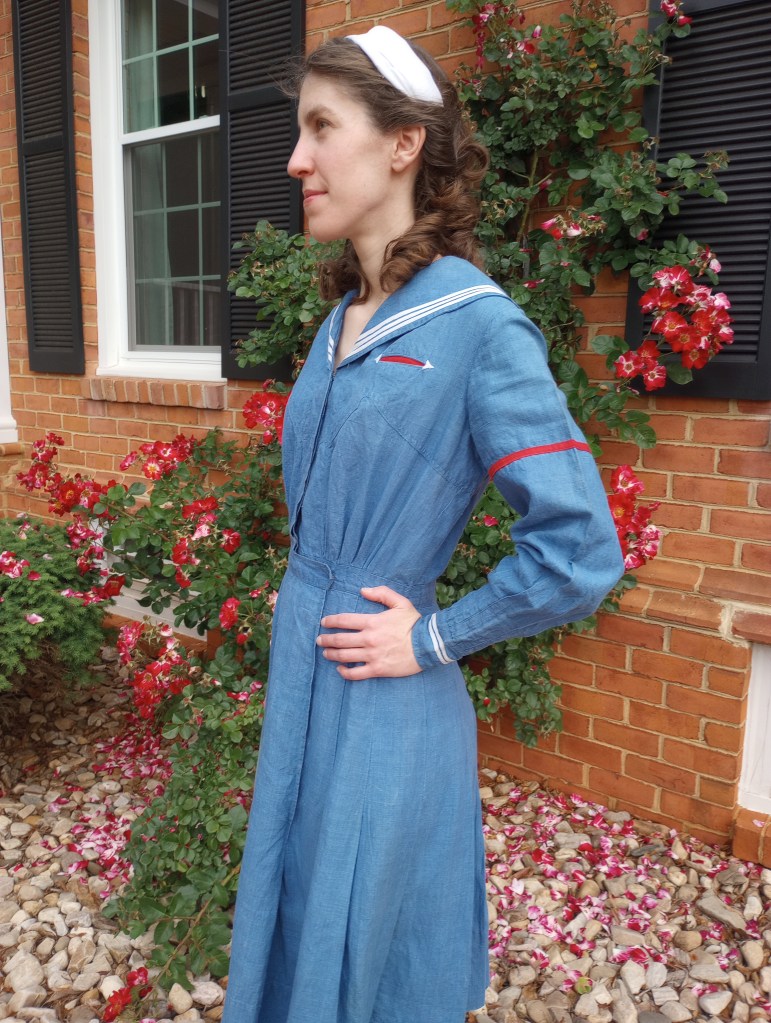
This second dress is probably from the middle of the 1910s, likely made during WW1. I’m not sure if this would have been a uniform or was meant to be a stylish garment which capitalized on the navy/sailor styling when patriotism affected the trends of the day. The fabric is very durable and heavy and the insignia seems specific, leading me to think it was more likely a uniform of some kind. Not necessarily a military/US navy uniform, but the uniform of some kind of support group or occupation.

I can tell you one thing, despite the nautical theme, I would not want to fall into the water wearing this! It was extremely heavy when wet as I washed it! It has a front closure, but in two layers. The skirt closes at the side and blouse in center front.

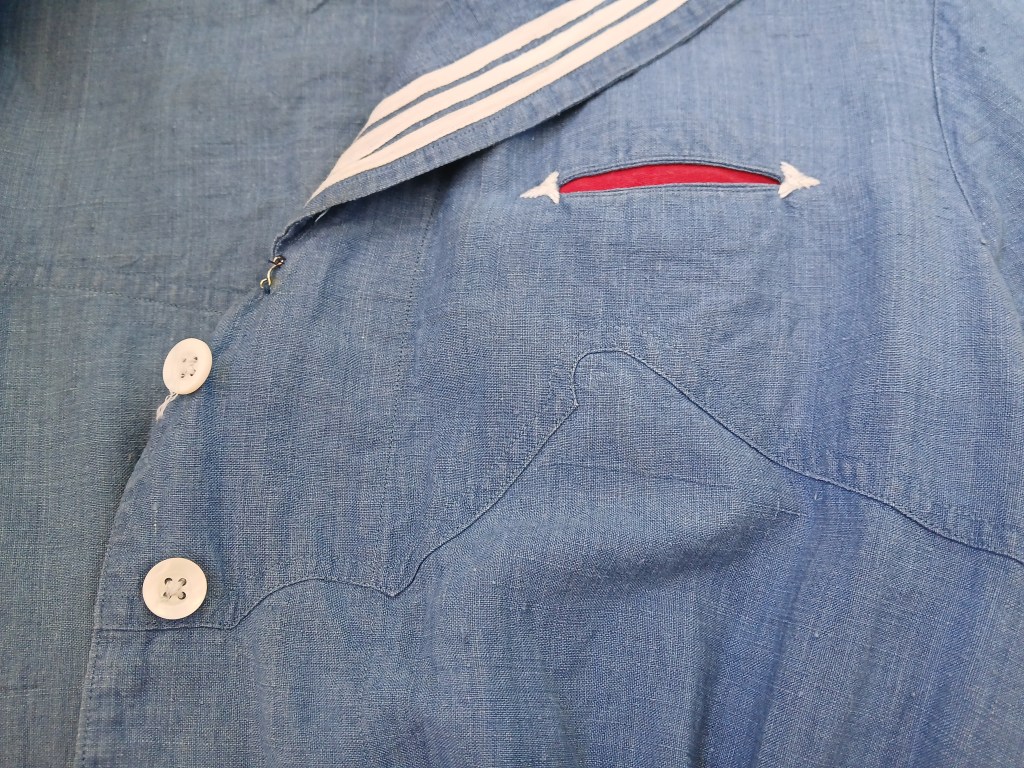
Though definitely meant to be durable, it is also a very carefully crafted garment. The skirt is very precisely pleated. There is also pleating at the wrists to gather in the full sleeves and gathering at the waist into the bodice.

The seam line on the bodice was really interesting! Inside, you can see the careful finishing of seams and a tailor’s label.

Finally, this purple dress is likely from the early 1910s, pre-WWI. I’m guessing this based off the length of the skirt and the style of over skirt. This one has a back closure, similarly, in two different places (three if you count fastening the belt which is attached). It was difficult to put on myself so the wearer might have had regular assistance in dressing, another sign it was probably earlier.
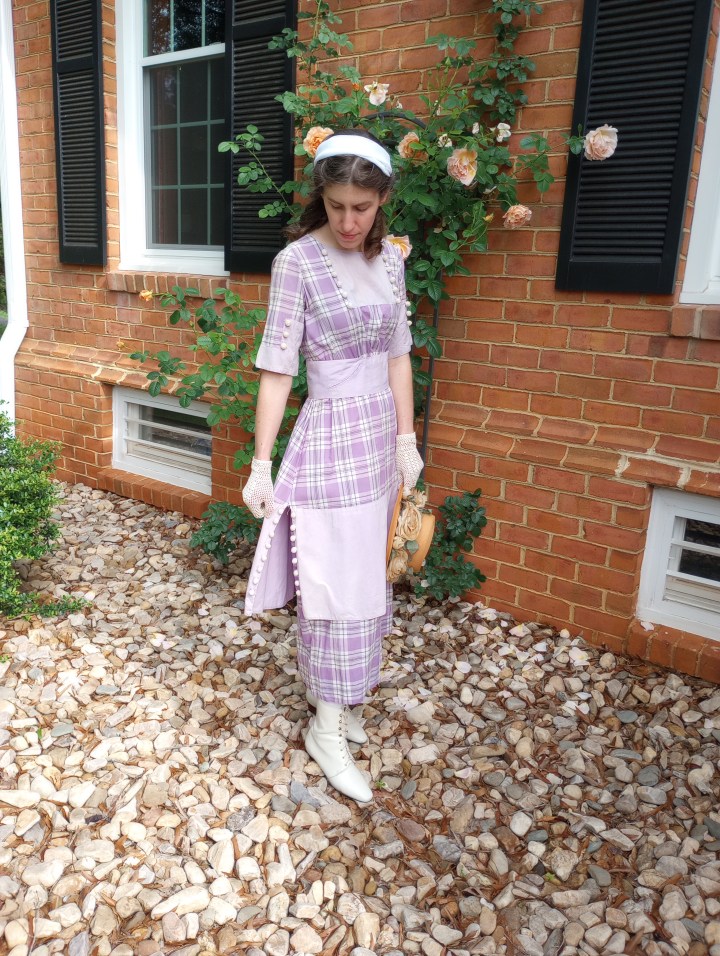
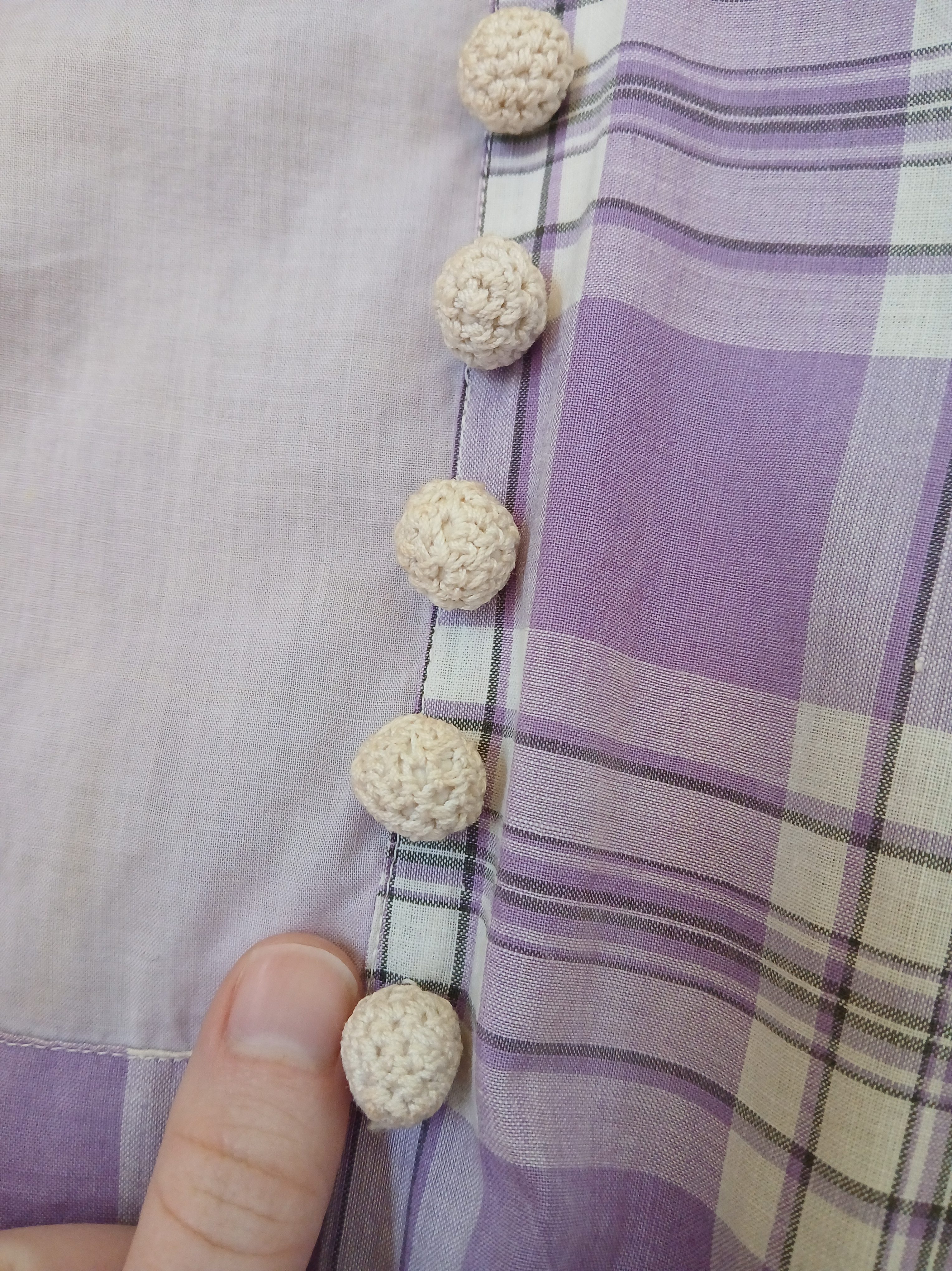
The buttons (or perhaps I should say bobbles since they don’t all serve as buttons) are amazing! I can’t imagine how much time someone took to crochet them all. Currently, they are not functional. Someone later added lots of snaps to close it.


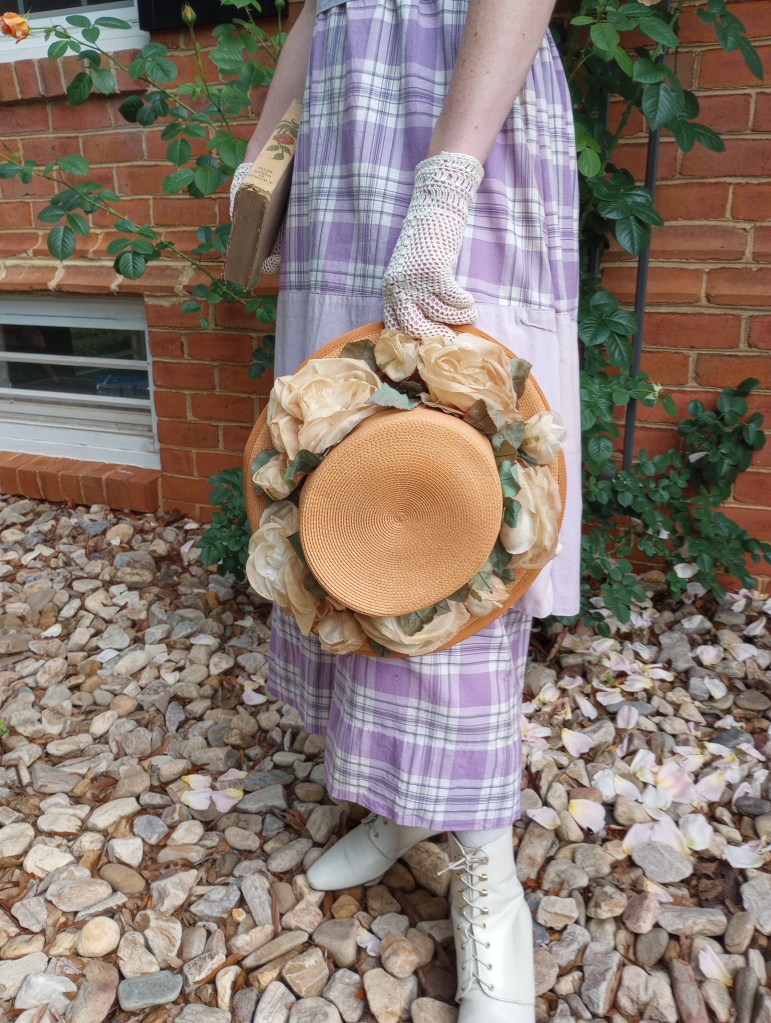


Overall, the three dresses were in great shape! There were some stains and holes (which I tried to hide in the pictures) but these dresses could still be worn today. It was such a treat to get to wear them!
 Welcome To The Carriage House
Is that a pocket in the belt for the purple dress? How interesting!
LikeLike
Hey! The purple dress has two welts which I think are meant to look like pockets, but they don’t open. It does make me curious if there was a specific purpose for real pockets on a belt sometimes or if the maker just wanted to add embellishments?
LikeLike