The overturn of Roe Vs. Wade continues to shake things up. I am writing from what I have observed and heard from serving at a crisis pregnancy center. I have not found a lot of research material on this topic, but I think it would make a very interesting study.
From conversations I’ve had with women facing an unwanted pregnancy, most women were only considering two options. Before volunteering, I would have expected a spectrum. I would have expected women who were leaning toward parenting to consider adoption as their second choice. I would have expected women who were leaning toward abortion to consider adoption as their second choice. However, I never once interacted with a client who was seriously considering adoption. For the women who were undecided, it always seemed to be between parenting and abortion, never between parenting and adoption, or between abortion and adoption.
Why is this?
Many of the undecided women said that they could never “give their child away.” Some expressed concern that they would grow too attached and not be able to actually follow through with the adoption. Some thought it would be selfish to bring a child into the world and expect someone else to raise him or her. In other words, there was a sense of shame around adoption, mingled with fear.
If you are unable to parent, choosing to place your child with a family who can give him or her better opportunities in life should not bring shame.
If you are a woman who is facing (or has faced in the past) an unexpected pregnancy, I would encourage you to really examine your feelings. If you are undecided between parenting and abortion, does the idea of adoption give you a sense of shame? Why? Is it because you feel a responsibility to this developing child? Is it because a strong feeling of connection with your developing baby is natural and good? If you choose abortion, will that relieve that sense of shame or increase it?
To those who are not in this position and want to be an advocate for adoption, consider how you talk about this issue. Even well intentioned people might need to check their words. For example, a godly grandmother in my church once commented that it was “such a shame that Mr. X didn’t really know his own granddaughter because his daughter had given her up for adoption.” I asked this lady to consider her words. She was a grandmother and was looking at it from the grandmother’s perspective. Of course, she would want unlimited access to her grandchildren! However, she didn’t see that for this young woman who didn’t feel equipped to parent, it would have been much easier and culturally acceptable for her to have an abortion (perhaps without even informing the grandparents of their granddaughter’s existence). Instead of using phrases like “give up for adoption” or “put up for adoption” which imply abandonment, use the phrase “place for adoption.” This implies intentionality and dignity in choosing who should have the responsibility of parenting her child.
Adoption typically has no expense to the birth mother. The cost is almost always fully on the adoptive family (a reason why they often seek financial support) including the prenatal care of the birth mother.
The kind of adoption and the extent of communication between the birth mother and adoptive family is determined by the birth mother. That means if she prefers open communication and opportunities to visit, she can choose an open adoption. If she prefers privacy and anonymity, she can choose a closed adoption.
Finally, women considering adoption and advocates of adoption should be informed about adoption and should be realistic that it is challenging. For adoption to happen, a loss must happen first. There will be grief. Though I would argue that the life of the child being preserved and given a chance makes it a far better option than abortion, it is still going to be hard for the birth mother, for the adoptive parents, and for the child. We should acknowledge that the child may have questions and hurts to wrestle with as they are growing up. It may be difficult for adoptive parents when their adopted children have a desire or need to connect with their birth parents. It will certainly be hard for the birth mother (and father). We can celebrate that adoption offers hope, while still acknowledging the loss that comes with it.
Here is one local adoption agency that serves the community: Family Life Services.
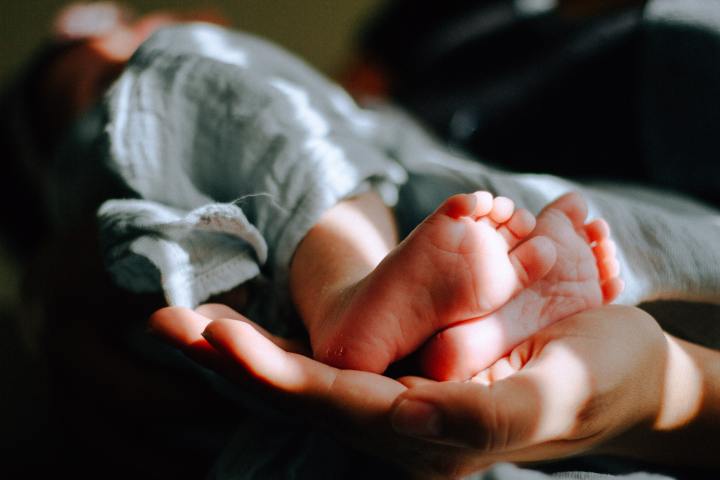
Photo by Omar Lopez on Unsplash
 Welcome To The Carriage House